
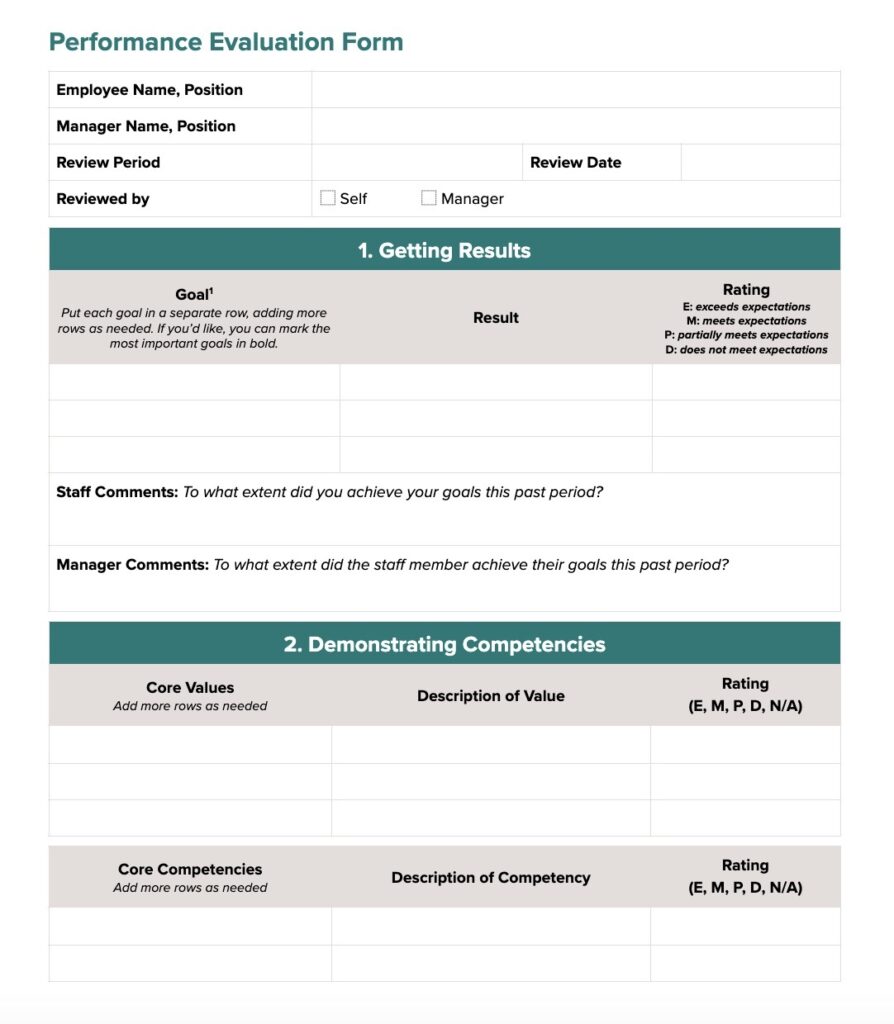
Performance evaluations provide a structured opportunity for managers and staff to review progress to goals, reflect on overall performance, realign on expectations, share feedback (including praise), and discuss next steps.
Your organization should conduct performance evaluations for managers and staff at least once a year. This free, downloadable resource provides:
- A customizable performance evaluation form template
- A suggested process and timeline to conduct evaluations
Use this template to prepare for one-on-one evaluation conversations. Managers, use the form to assess staff performance. Staff, use it to self-evaluate and share feedback with your manager. Ver este recurso en español.
Activate your team’s full potential by enrolling in our Ace Performance Management training package! Gain the confidence and strategies you need to develop your staff, distinguish growth areas from performance problems, give better feedback, and create great team culture.
Why Are Performance Evaluations Important?
Performance evaluations are critical opportunities for managers to align with staff about their performance and discuss their trajectory at the organization. They help managers and staff step back from the day-to-day, summarize progress from the year, realign on expectations, systematize feedback, and chart next steps. They are also a space for managers to celebrate their staff and identify ways to invest in their growth.
What Are the Best Practices of an Effective Performance Evaluation?
- Managers, set the process up for success: Before assessing your direct report’s performance, make sure that goals and expected results are clear at the start of the year. Then, read the Eight-Step Guide to Performance Evaluations for Managers and FAQs About Performance Evaluations.
- Preview the evaluation together: Set aside time at a check-in to discuss the performance evaluation process and timeline. If it’s your first time using this template (linked below!), go over the form together and answer any questions. Then, schedule your evaluation meeting in advance.
- Reflect on the what and the how: Before meeting, the manager and the staff member should each review work products, role expectations, and goals. Reflect on what was achieved (goals and results) and how it was done (mindset, values, approach).
- Summarize, don’t surprise: This formal conversation should reflect and build on feedback you provided at regular check-ins throughout the year. There should be no (or very few) surprises in the evaluation.
- Broaden your perspective: Managers should seek input from fellow team members, colleagues in other departments, and community members or partners. Seeking input can help managers offset bias and identify patterns, especially across lines of difference or power.
What Should a Performance Evaluation Include?
Our performance evaluation system consists of four main sections:
- What was achieved? The first section of the review focuses on the extent to which the staff member clearly met expectations. (In cases where unforeseen opportunities or challenges arose during the year, they should be added here.)
- How was it achieved? This section focuses on the values that all employees are expected to demonstrate, and the specific competencies necessary for effective performance in the role.
- Summary assessment and next steps. This section captures overall performance for the year and identifies strengths, areas for improvement, and next steps (including learning or developmental goals).
- Feedback for manager and manager self-reflection. This section gives both the staff member and the manager space to reflect on what’s working and what support is needed moving forward.
For the first two sections, we recommend using the following rating scale:
- Exceeds expectations: Consistently delivers exceptional results; is a model for others to follow.
- Meets expectations: Consistently meets expectations in all areas.
- Partially meets expectations: Meets expectations in some areas and needs improvement in others.
- Does not meet expectations: Needs significant improvement quickly.
When Should Performance Evaluations Happen?
Set a standard performance evaluation “season” each year to normalize the process and cement feedback as part of your organizational culture. Since performance evaluations often go hand-in-hand with promotion decisions and raises, we recommend aligning the evaluation cycle with your fiscal year.
Key Steps in Performance Evaluation for Managers and Staff
Set deadlines for the following steps:
- Evaluation launch
- Staff member completes self-evaluation form
- Manager gathers input from other team members, colleagues, or community members
- Manager sends draft evaluation to staff
- Manager and staff meet one-on-one to discuss and align
- Final evaluation forms due
You should inform staff and managers that the performance evaluation process is starting at least six weeks before evaluations are due.
How to Use This Template
Managers should use this template to assess individual staff performance. Staff members should use this form to self-evaluate and share feedback with your manager.
- Page 1 offers background for managers
- Pages 2-4 can be shared with both staff members and managers
Managers: To make the most of this template, customize it. Insert the goals, team or organizational values, and core competencies that you have set expectations for. Outline the key deadlines for your evaluation process. Add or remove sections as you see fit.
Download Evaluation Template
Get your editable template and start building your performance evaluation process.

The Management Center is a 501c3 organization that helps leaders working for social change build equitable, sustainable, and results-driven organizations via trainings coaching, and online resources and tools.